
The Invisible Enemy
Voices from ChernobylThis flow traces the struggle to understand radiation when ordinary senses and familiar explanations cannot reveal where danger lies.
increasing Bearing strength in each event
 decreasing
Bearing strength in each eventdecreasingA Fire Can Be Seen
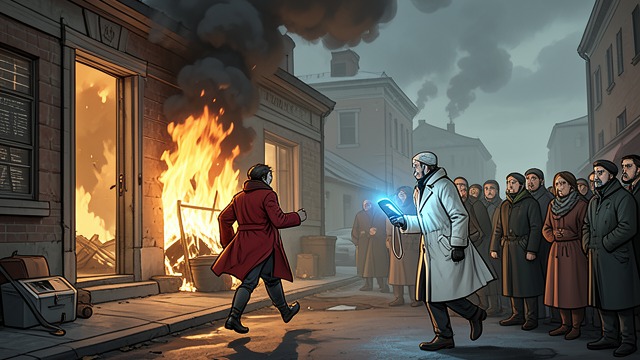
A Fire Can Be Seen
Familiar Signs
Residents and responders saw flames, smoke, and damaged structures. These visible signs encouraged people to interpret the accident through ordinary ideas about fire.
The Unseen Threat
Radiation did not announce itself in the same way. The contrast between visible fire and invisible exposure made the emergency difficult to recognize and harder to communicate.
Searching for a Color
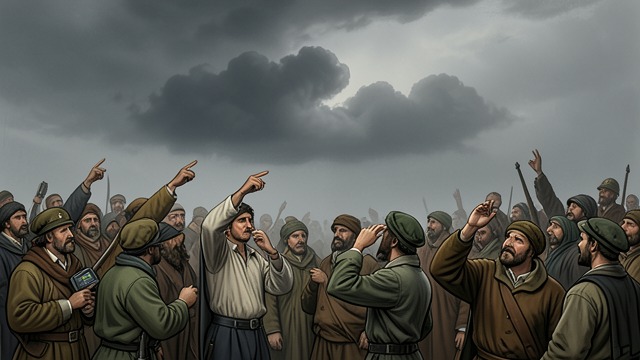
Searching for a Color
Questions About Appearance
Residents asked whether radiation was black, blue, or colorless. Some described particles or rain they believed they had seen, trying to give an intangible danger a shape.
Knowledge Through Metaphor
These accounts reveal the pressure to make the unknown imaginable. Their value lies in showing how people reasoned under uncertainty, not in making every perception a measurement.
The Dosimeter Clicks

The Dosimeter Clicks
Instruments Stand In
Dosimeters offered readings that people could not obtain through sight or touch. Workers and villagers treated the instrument as a translator between invisible exposure and a practical decision.
Trust and Confusion
Equipment was scarce, poorly understood, or sometimes unreliable. The device could signal danger while leaving people unsure what the number meant or whether anyone in power would act on it.
Food Looks Ordinary
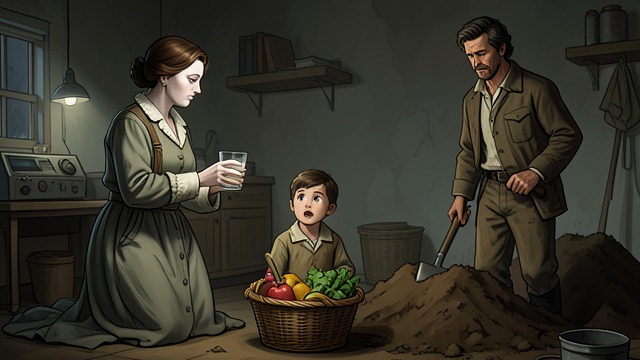
Food Looks Ordinary
Contamination Without Sensory Warning
Milk, meat, vegetables, and soil could appear normal while tests registered radioactivity. Taste and appearance could no longer assure families that a meal was safe.
Routine Becomes Risk
People continued familiar agricultural and household practices because danger did not announce itself through ordinary senses. The invisible enemy unsettled the basic trust that daily life depends upon.
A World Not Fully Known
A World Not Fully Known
Beyond Human Timescales
Some narrators confront half-lives and consequences extending beyond ordinary imagination. Their inability to picture the future is itself part of the disaster's psychological weight.
Living Without Mastery
The testimonies do not claim that every mystery can be solved. They show people building partial explanations and lives within a world that remains scientifically and emotionally unfinished.
The night of April 26, 1986
The first weeks after the accident
During decontamination work
The years after the accident
The book's concluding reflections
